At NPI Connect, we provide smart building solutions guided by 40 years of experience serving commercial clients across Washington, DC, Maryland, Virginia, North Carolina, and South Carolina.
If your commercial building still runs on disconnected, outdated systems, you’re spending more than you should on energy, maintenance, and daily operations. A smart building changes that. It connects HVAC, lighting, security, and other core systems through a single integrated network, giving you real-time control and measurable data on how your facility performs. At NPI Connect, our smart building and systems integration team has spent four decades designing and deploying these solutions for offices, healthcare facilities, and enterprise organizations across the Mid-Atlantic. We are a smart building solutions provider with the infrastructure knowledge and hands-on project history to modernize your facility from the ground up. Reach out to schedule a consultation and learn how building automation can reduce costs and improve the way your property operates.
Smart Building Solutions DC, MD, VA, NC, SC
A smart building is a facility that uses interconnected technology and data-driven automation to manage its core systems more efficiently. Rather than operating lighting, HVAC, access control, and power independently, a smart building ties them together through sensors, IoT devices, and a centralized management platform. The result is a property that responds to occupancy patterns, adjusts climate settings automatically, and delivers real-time performance data to building managers.
This approach applies to new construction and existing properties alike. Many building owners across the Mid-Atlantic region are retrofitting older commercial spaces with smart building systems to cut energy waste and meet modern performance standards set by programs like ENERGY STAR for commercial properties.
Types of Smart Building Solutions We Provide
NPI Connect provides a full range of building technology services. Our team works across the design, installation, integration, and ongoing maintenance of each system. Below are the primary solution areas we cover.
- Building automation. We design and install centralized control systems that manage HVAC, lighting, and power across your facility. These platforms allow you to monitor energy consumption, set schedules, and respond to building conditions without manual intervention. Automation is typically the foundation of any intelligent building project.
- IoT integration. Sensors, controllers, and connected devices generate the data that makes building intelligence possible. We deploy and configure IoT networks that feed occupancy, temperature, humidity, and air quality data into your building management system. This goes well beyond basic thermostat control.
- Smart lighting. Lighting accounts for a significant share of commercial energy use. Our smart lighting solutions include daylight harvesting, occupancy-based dimming, and Power over Ethernet (PoE) fixtures that reduce consumption while maintaining occupant comfort.
- AV and collaboration systems. Meeting rooms and shared spaces need audio-visual technology that works reliably. We integrate conferencing equipment, displays, sound systems, and room scheduling tools so that collaboration spaces function the way your teams actually use them.
- Data center infrastructure. Smart buildings generate and process significant amounts of data. We build and optimize the data center environments that support those workloads, including rack systems, power distribution, cooling, and structured cabling.
- Workspace design. Open floor plans, huddle rooms, and hybrid work environments each have different technology requirements. We plan and implement AV, networking, and acoustic solutions that match the way each space is used.
- Energy management and sustainability. Smart building technology enables you to track and reduce energy use across your property. We help clients set benchmarks, identify waste, and work toward carbon reduction goals using real performance data rather than estimates.
- Access control and security. Credential-based entry systems, surveillance integration, and visitor management platforms give building owners and facility managers control over who enters their property and when. These systems also feed valuable occupancy data back into your building platform.
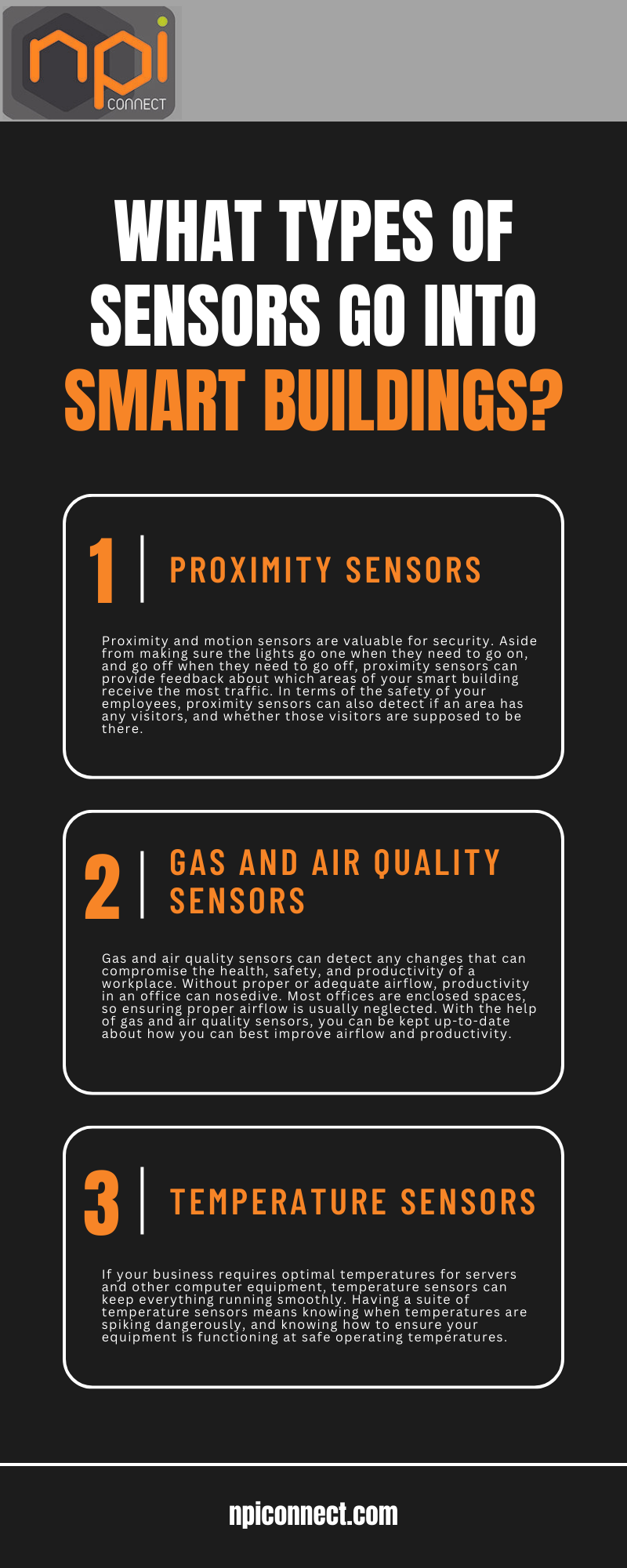
Smart Building Infographic
Why Choose NPI Connect for Smart Building Technology?
Four Decades of Building Infrastructure Work
NPI Connect has been installing, designing, and supporting building technology systems since the mid-1980s. That’s 40 years of work across commercial offices, healthcare campuses, government facilities, and educational institutions in Washington, DC, Virginia, Maryland, North Carolina, and South Carolina. Our team includes dedicated smart building engineers, structured cabling technicians, AV integration specialists, and design assist professionals who collaborate on every project. You can review examples of our completed work on our past performance page.
Most smart building projects involve multiple systems that need to communicate with each other. A company that only handles one piece, say, cabling or AV, can’t account for how that piece affects everything else. We operate across every layer of the building technology stack, which means fewer vendors, fewer coordination gaps, and a single point of accountability from design through deployment.
A Smarter Building Is a More Efficient One
The U.S. Department of Energy has invested heavily in research around grid-interactive efficient buildings, concluding that smart controls, sensors, and analytics can significantly reduce a facility’s energy consumption during peak demand. The GSA Smart Buildings program has applied these same principles across hundreds of federal properties to cut operating costs and improve occupant comfort. These are not theoretical benefits. They’re documented outcomes that commercial property owners are achieving with the same types of systems we install.
We evaluate your facility, identify the systems and sensors that will deliver measurable results, and build an infrastructure that can scale as your needs change. That client-first approach is what’s kept building owners working with us for decades.
What Is Important to Understand About Smart Building Systems?
Key Components and Technologies in a Smart Building
Smart building technology is not a single product. It is a layered system of hardware, software, and network infrastructure that works together. The core components include:
- Building automation systems (BAS) that control HVAC, lighting, and power based on programmed schedules and real-time sensor data
- IoT sensors and edge devices that collect environmental data like temperature, humidity, CO2 levels, and occupancy
- A centralized management platform or dashboard that aggregates data and provides building operators with actionable visibility
- Structured cabling and network infrastructure that physically connect every device and system within the building
- Cybersecurity protocols that protect connected devices from unauthorized access, consistent with guidance from the NIST IoT Program
Each layer depends on the others. Sensors generate data, but that data has to move across a network, reach a management platform, and produce something a building operator can act on. Without proper integration between those layers, individual components underperform regardless of how advanced they are.
What Are Important Aspects of a Smart Building Project?
The success of an intelligent building project depends on planning decisions made before a single sensor is installed.
First, assess the existing infrastructure. Most commercial properties in the DC, Maryland, and Virginia corridor were built before modern IoT protocols existed. The existing cabling, network switches, and electrical systems may not support the bandwidth or power requirements that a connected building demands. NPI Connect performs site evaluations to identify what can be reused and what needs to be replaced or upgraded.
Second, prioritize interoperability. Building systems from different manufacturers often use different communication protocols. A digital building strategy should use open-protocol systems wherever possible to avoid vendor lock-in and make future upgrades less expensive. The EPA’s indoor air quality guidance also underscores why HVAC and ventilation systems need to work in coordination with building automation, not in isolation.
Third, think about cybersecurity from day one. Every connected device is a potential entry point. NIST’s IoT standards provide a framework for securing building networks, and it’s far easier to build those protections into the initial design than to retrofit them later. There are many common misconceptions about what smart buildings actually require, and security is one area where assumptions can be costly.
What Is the Smart Building Implementation Timeline?
Every project is different. That said, commercial smart building deployments tend to follow a general sequence.
- Site assessment and infrastructure audit: 2 to 4 weeks depending on building size and complexity
- System design and engineering: 4 to 8 weeks, including specifications for cabling, sensors, and control platforms
- Procurement and material staging: 2 to 6 weeks, depending on product availability and vendor lead times
- Installation and integration: 6 to 16 weeks, depending on the scope and whether the building is occupied during the work
- Testing, commissioning, and training: 2 to 4 weeks to verify every system operates correctly and that building staff can manage daily operations
A smaller office retrofit might take three months from start to finish. A ground-up intelligent building project in a large commercial space could take nine months or longer. NPI Connect provides detailed project timelines during the design phase so you know what to expect at every stage.
What Should You Bring to Your Smart Building Consultation?
Having the right information available makes the initial consultation more productive. If you can, bring:
- Floor plans and building layouts, including any existing cabling or electrical diagrams
- A list of current building systems, including HVAC equipment, lighting controls, and access control platforms
- Recent energy bills or utility statements that show current consumption patterns
- Any facility management pain points or specific goals such as energy reduction, improved tenant comfort, or security upgrades
During the consultation, our team will review your building’s current state, discuss priorities, and begin outlining a strategy for integration. We typically follow up with a detailed site assessment within two weeks.
Important Industry Resources for Smart Building Projects
Several federal agencies and industry organizations publish standards and guidance that shape how smart building technology is designed, installed, and operated. These are useful starting points if you want to understand the regulatory and performance landscape.
- The U.S. Department of Energy’s Building Technologies Office publishes research and pilot program results on grid-interactive efficient buildings
- The EPA’s ENERGY STAR program provides benchmarking tools and certification for commercial building energy performance
- The General Services Administration maintains a smart buildings directive that outlines technology standards for federal facilities
- NIST publishes IoT cybersecurity guidance relevant to any building deploying connected devices
- BICSI sets standards for information and communications technology infrastructure in commercial buildings
The demand for high-performance building design is growing across both the public and private sectors. Understanding these resources can help you set realistic goals and hold your integration partner accountable to industry standards.
Schedule a Consultation with NPI Connect
If you’re considering smart building technology for a new or existing commercial property, NPI Connect can help you evaluate your options. We offer free initial consultations and site assessments across Washington, DC, Maryland, Virginia, North Carolina, and South Carolina. Our team will walk through your building’s current systems, discuss your goals, and provide a clear path forward. Contact us to schedule a conversation about your building’s potential.