There is much talk these days about the Internet of Things, but what is it really? Network Products Inc. (NPI) provides customers a wide range of network solutions customized for their workflow and business needs. From data centers to smart building designs to the integration of the Internet of Things, we assist companies and government agencies to optimize their workflow and reach their goals. Give us a call to arrange a free consultation with one of our specialists to learn how NPI Connect can help you.
Table of Contents
The Internet of Things (IoT) is a network made of physical devices that are able to transmit digital information to a designated location or hub. The physical devices are considered “smart” devices because of their ability to collect and send certain information. The list of available smart devices grows by the day and currently includes industrial machines, kitchen appliances, televisions, automobiles, residential and commercial utility meters, and much more.
Smart devices rely on Internet protocols in order to communicate. This is the same method used by computers that are connected to the Internet. However, rather than visit websites and watch videos, the Internet of Things is intended to enable devices to digitally report certain types of information in real-time. It can be automated to be more efficient and reliable than humans. The concept began with the use of radio-frequency identification (RFID) tags for retailers and their suppliers. RFID tags revolutionized price tag efficiency in that it makes the manual placement of price tags on goods unnecessary, saving time and money.
Because the IoT is still in its infancy, there are some concerns. In particular, privacy is a concern among those who feel that the technology can all too easily be hijacked by nefarious parties. In theory, they could directly or indirectly access the personal and sensitive information of consumers and employees and use it for their own gain and destructive purposes.

Smart Building Sensors And The Internet of Things
The IoT can revolutionize a workplace, and our specialist from NPI Connect can help you turn your office into a more streamlined and efficient space. A key feature of a smart building is the application of a range of sensors and monitors to make sure you have the best and most up-to-date information about your workplace so you can make necessary adjustments to increase performance.
Temperature Sensors
These are some of the most commonly-encountered sensors in smart buildings. They relay important information about the ambient temperature so you can make changes or adjustments as you see fit.
Temperature sensors operate with a variety of mechanisms: Some sensors are placed on integrated circuits, and some are basic thermocouples. With thermocouples, the wires from individual metal elements contact each other, and a temperature difference between the two metals registers as temperature changes.
Incorporating temperature sensors in your workplace isn’t just a matter of personal comfort and convenience. Temperature sensors are essential if you have to maintain a low temperature for certain IT components such as servers. As an added bonus, incorporating temperature sensors in your smart building also helps you leave a smaller environmental footprint. With the help of temperature sensors and motion sensors, you’ll be able to adjust climate control depending on which areas see the most use.
Motion Sensors
Another common feature in smart buildings, motion sensors are another useful tool to improve workplace efficiency with the IoT. Motion sensors are used for lights, but they also have applications with plumbing, doors, and security cameras. They’re most often thought of as security measures, but motion sensors can also improve your workplace performance by showing you which areas of your workplace receive the most traffic, and which conference rooms are unoccupied.
Like temperature sensors, motion sensors rely on many different mechanisms. They commonly rely on infrared and radio waves, and when no motion is detected for a set duration of time, they can automatically switch off lights or other appliances to increase your savings and help you create a more sustainable work environment.
Gas and Air Quality Sensors
Motion and temperature sensors are more common, but gas and air quality sensors can provide just as much benefit to your workplace. Improper airflow can actually negatively impact your employees’ performance, so installing sensors that can relay information about your air quality can help you increase employee comfort.
Internet of Things Benefits To Know
IoT is an essential piece of innovation that is set to improve significantly in time. There are many benefits of having actual things linked to each other. Here are a few of the advantages that we at NPI Connect have identified :
- More information means better decisions
With added sensing units, these devices have the ability to gather a big quantity of data on many different locations.
In addition to the useful components of being able to understand which foods are going out of date in your wise refrigerator, this boosted home product will be able to provide you extra information on its power intake, temperature level, the average time of the door spent open and much more.
A greater circulation of details implies that business behind the device can evaluate large patterns in the information to much better improve the functions of the device.
Lots of businesses are understanding the power of this technology and it is resulting in a large boost in the market. The total market worth of the Internet of Things is set to grow to over $3 trillion every year by 2026 *.
- Ability to track and keep track of things
In addition to tracking data for a company to utilize, it likewise greatly benefits the user.
These gadgets would have the ability to watch out on the present quality of items in your home. Knowing the state of your items will allow a homeowner to understand when they require to change a product, without them having to consistently examine the quality themselves.
- Lightened workload with automation
We believe that having a gadget doing most of the work for you suggests that you can conserve more time and expense. Think of having your fridge order a new container of milk to be delivered when it reaches a specific level of expiry? Sounds great to us.
This greatly lowers human efforts. It likewise results in gadgets being created that need little to no human intervention, permitting them to run totally by themselves.
- Increased effectiveness by conserving cash and resources
Along with conserving time for the gadget owner, it can likewise lead to expense savings. If lights immediately turn themselves off the minute you leave the room, you could conserve a lot of money on your electrical energy expenses.
As you can see, linked devices can offer numerous useful implementations. The IoT system encourages maker to machine (M2M) interaction resulting in increased long-term efficiency for both the company and user.
The rate of development for maker to machine interaction is high. The total variety of connections are set to grow from 5 billion in 2014 to 27 billion in 2024.
- Better lifestyle
In the end, all the advantages lead to an increased lifestyle.
Having your gadgets track and order things for you, turn light switches off for you, and help manage essential tasks that you might not have the time to do yourself definitely takes away a great deal of stress.
There is no doubt that individuals are typically getting busier as the years go by. With many devices being developed and brand-new innovations being implemented, it’s tough to keep an eye on everything. It’s fantastic to be able to do the things you delight in and have a computer look after the mundane things you know require to be done.
Improvements to your lifestyle, health benefits, and improved health are likewise part of the IoT future.
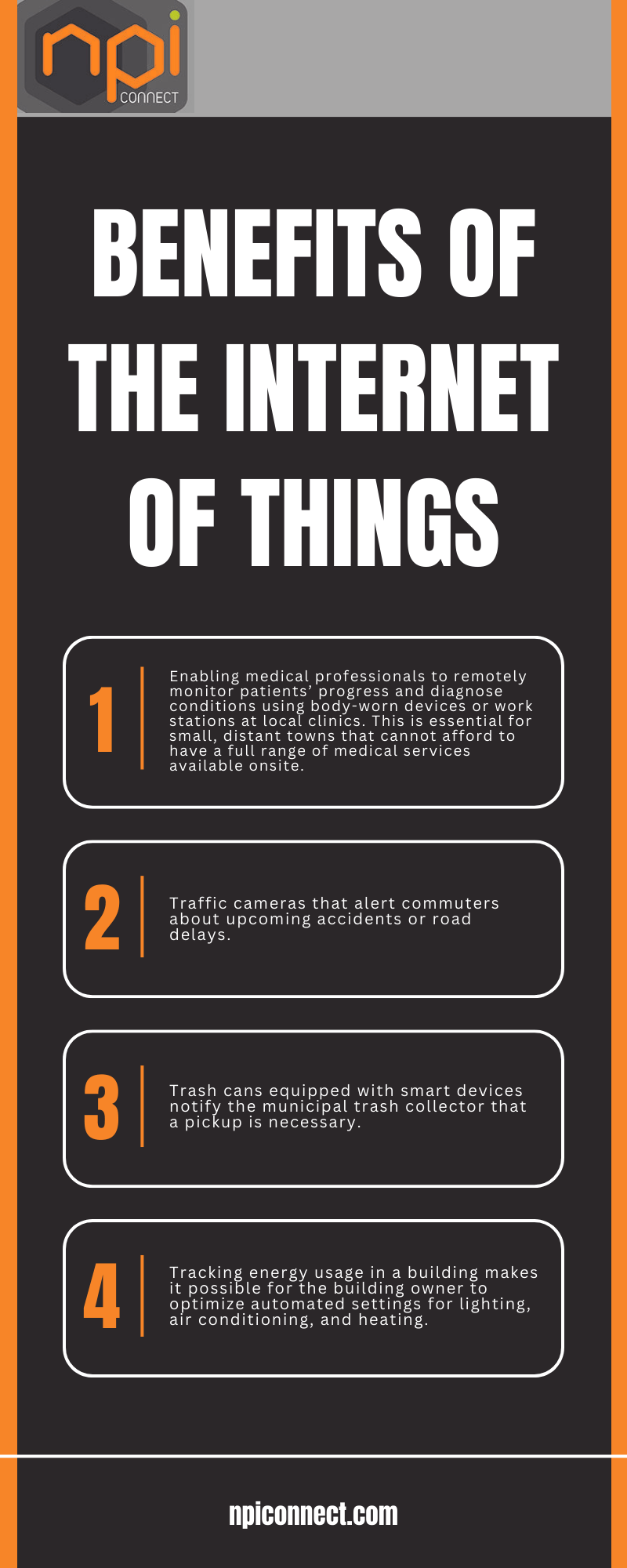
Internet of Things Infographic
Statistics
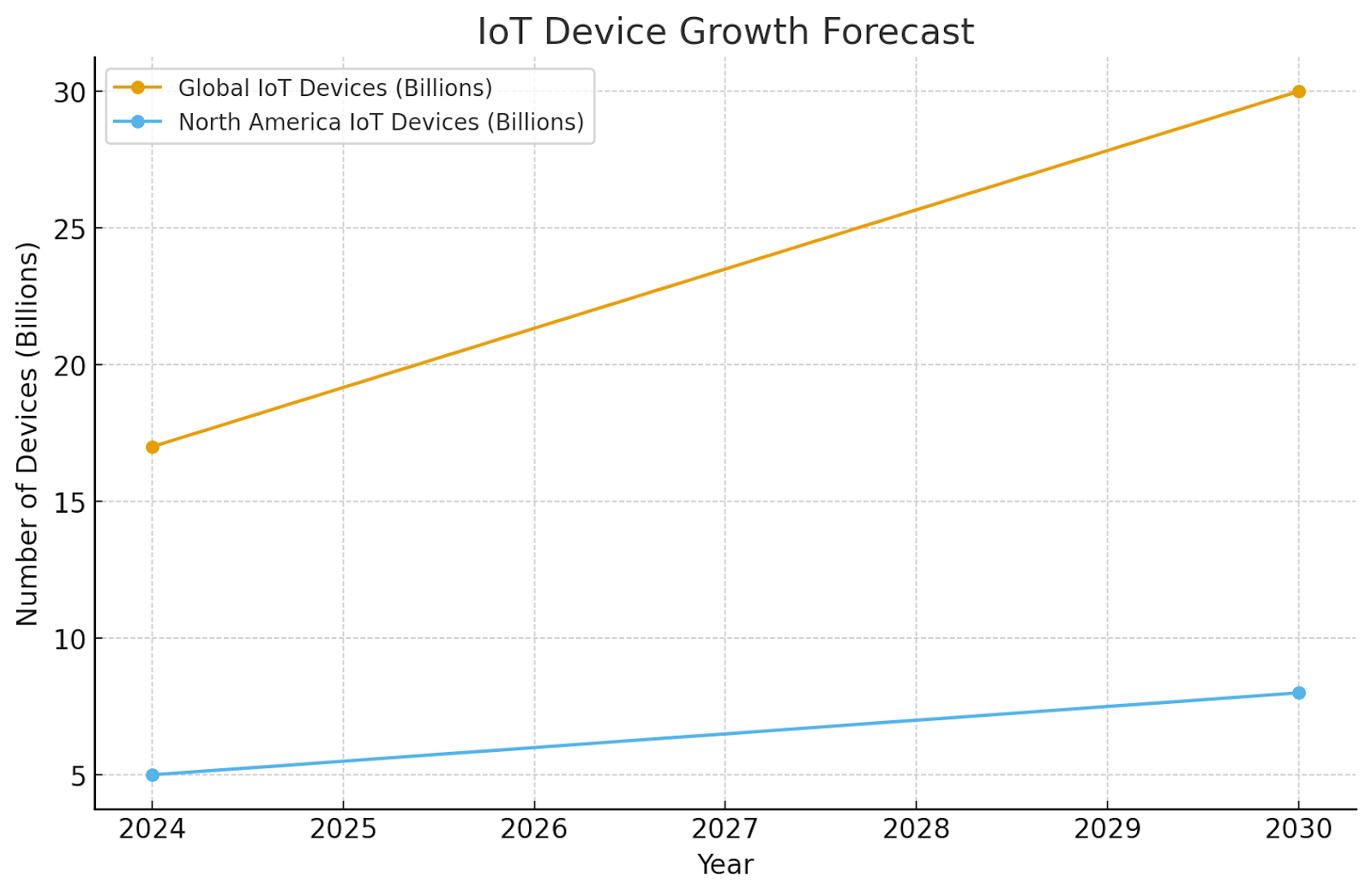
According to Statista, in 2024, the number of Internet of Things (IoT) devices is forecast to reach over 17 billion, surpassing the number of people on earth, showing how integrated technology is becoming. By 2030, IoT connections are forecasted to reach an estimated 8 billion in North America alone.
 Internet of Things FAQs
 Internet of Things FAQs
In the innovative tech space, the concept and technology surrounding the IoT invariably pique the interest and curiosity of tech enthusiasts and enterprises alike. Whether exploring IoT for home automation, industrial applications, or intricate data management, myriad questions often bubble to the surface, necessitating clarity, understanding, and insightful answers.
What Is It About This Technology That Seamlessly Intertwines Our Digital And Physical Worlds?
The IoT is an expansive network of interconnected devices, all of which gather and share data about the way they are used and the environments in which they are operated. This pervasive technology transcends the traditional internet connectivity from computers and smartphones to a vast array of devices and everyday objects. With embedded sensors, processors, and communication hardware, these devices collect, send, and receive data, facilitating enhanced automation, improved decision-making, and enriched user experiences.
How Does This Technology Address The Burgeoning Demand For Smart And Secure Cities?
In smart cities, the IoT extends its capabilities to forge connectivity and data sharing between various city elements, such as transportation systems, energy grids, and emergency services. This interconnected web empowers city planners and administrators to garner real-time insights, optimize resource allocation, enhance service delivery, and establish robust security frameworks. The convergence of data from myriad sources fosters informed decision-making, facilitating safer, efficient, and more livable urban environments.
What Are The Potential Challenges And Solutions In Ensuring Robust Security In IoT Implementations?
Despite its myriad benefits, the Internet of Things isn’t devoid of challenges, especially pertaining to security. As devices exchange colossal volumes of data, concerns around data privacy, unauthorized access, and cybersecurity threats emerge starkly. Solutions revolve around implementing stringent security protocols, regular firmware updates, secure data storage and transmission, and maintaining compliance with global data protection regulations. Moreover, fostering a security-centric culture, wherein every stakeholder prioritizes and adheres to cybersecurity norms, becomes paramount.
How Does IoT Pave The Way For Innovations In Healthcare, And What Implications Does It Have?
Healthcare is one domain where IoT has significantly sculpted innovative pathways, enhancing patient care, facility management, and medical data handling. With connected medical devices, remote patient monitoring becomes seamless, ensuring timely medical intervention. Further, data from various sources facilitate predictive analytics, enhancing preventive care and resource management within healthcare facilities. The implications are vast, touching upon improved patient outcomes, optimized operational efficacy, and the creation of a more patient-centric healthcare ecosystem.
How Can Businesses Leverage IoT For Improving Customer Experiences And Driving Growth?
In the business sectors, IoT fosters a profound impact on customer experiences and organizational growth by weaving together data from diverse customer touchpoints and operational processes. By harnessing and analyzing this data, businesses can tailor customer experiences, predict trends, and forge personalized engagement strategies. Moreover, IoT enables real-time inventory management, predictive maintenance of equipment, and optimized resource utilization, ensuring operational efficiency and consequently driving growth.
One of the key services that the Internet of Things offers is enhanced convenience and automation. Through IoT-enabled devices, individuals can remotely monitor and control various aspects of their environment. For instance, smart thermostats can learn and adapt to occupants’ preferences, adjusting the temperature accordingly. This not only optimizes energy usage but also provides a comfortable living space upon returning home. Similarly, IoT-enabled security systems can provide real-time alerts and allow homeowners to monitor their property from anywhere, promoting a sense of security and peace of mind.
Furthermore, the IoT contributes to data-driven decision-making. With an abundance of data collected from various sources, businesses can gain valuable insights into customer behavior, market trends, and product performance. This information empowers them to refine their strategies and offerings, ultimately enhancing customer satisfaction. Similarly, individuals can leverage IoT-generated data to make informed choices about their daily routines, health regimens, and even energy consumption patterns.
The communication between IoT devices is typically facilitated by protocols such as MQTT or HTTP, facilitating seamless data transfer across different devices and platforms. Cloud computing plays a vital role in IoT, as it enables scalable storage and processing of the massive volumes of data generated by connected devices. Machine learning and artificial intelligence algorithms are often employed to extract meaningful patterns and insights from this data, enhancing the overall functionality of IoT systems.
The Internet of Things has ushered in a new era of connectivity and innovation. Its services extend from convenience and efficiency to data-driven decision-making, offering tangible benefits to both businesses and individuals. Customers can harness the power of IoT to optimize their routines, make more informed choices, and enjoy heightened levels of control and security. The underlying mechanism of IoT involves interconnected devices collecting and transmitting data over the internet, which is then processed and analyzed to yield valuable insights and enable automated actions. As IoT continues to evolve, its impact on various sectors of society is poised to grow, shaping a future where connectivity and intelligence are seamlessly integrated into the fabric of everyday life.

Internet Of Things Glossary
In today’s digital-focused society, the Internet of Things plays a foundational role in modernizing how businesses manage their IT infrastructure. From smart buildings to advanced data monitoring, this expanding network of connected devices supports improved efficiency and automation across industries. Below, we’ve outlined and defined five essential terms and phrases to provide clarity for business decision-makers, legal professionals, and IT stakeholders engaging with IoT in corporate settings.
Smart Device Integration
Smart device integration refers to the seamless connection and communication between physical devices that are embedded with sensors and software. These devices collect, transmit, and sometimes act on data without human intervention. In a business IT infrastructure, this can include thermostats, lighting systems, security cameras, and environmental controls. By integrating these smart devices into a centralized platform, organizations can automate many routine tasks, increase energy efficiency, and track real-time metrics for performance optimization.
Common protocols like MQTT (Message Queuing Telemetry Transport) and HTTP (HyperText Transfer Protocol) support this integration, ensuring data flows consistently across devices and platforms. These technologies help businesses identify patterns in usage, monitor equipment, and make informed adjustments to workflows. Legal clients utilizing smart systems may also benefit from documented logs of sensor data to support operational transparency or security documentation.
Cloud-Based Data Management
In the context of IoT, cloud-based data management refers to the use of remote servers to store, manage, and process the vast amount of data generated by connected devices. This method provides scalability and flexibility, as it allows businesses to access large datasets without relying on internal hardware.
Using cloud storage also simplifies backup procedures and data recovery. For legal teams, maintaining audit trails and access logs is often essential, and cloud platforms can help make sure that such records are automatically preserved. Security protocols such as encryption and access control are applied to minimize unauthorized exposure of client or operational data.
Machine-to-Machine Communication (M2M)
Machine-to-machine communication (often shortened to M2M) is the direct exchange of information between devices without requiring human input. Within IoT systems, this communication is what allows devices to respond dynamically to real-time changes. For instance, a motion sensor detecting movement may signal lights to activate or a camera to record.
In commercial and legal environments, M2M communications can be applied to control access to sensitive areas, manage office occupancy, or automate compliance processes. While this type of communication improves efficiency, its use also underscores the importance of system-wide cybersecurity measures, especially where confidential legal data or secure facilities are involved.
Remote Monitoring And Automation
Remote monitoring and automation allow organizations to observe and control their connected systems from off-site locations. Through dashboards or mobile applications, IT and facilities teams can track performance indicators, adjust building systems, or receive alerts when thresholds are exceeded.
This is particularly valuable for legal clients with multiple locations or high-security areas. Automation reduces manual tasks such as turning off unused equipment or adjusting HVAC systems based on occupancy, thereby promoting energy savings. Alerts from monitoring systems can notify facilities teams of anomalies, including unauthorized access or air quality concerns, enabling swift action when necessary.
Data Privacy And Device Security
In an environment where devices are constantly transmitting data, protecting that information becomes a top priority. Data privacy and device security in the IoT context refer to practices and tools that prevent unauthorized access, tampering, or misuse of data collected by smart devices.
For businesses working with sensitive legal documents or client information, this is non-negotiable. Common strategies include multi-factor authentication for control systems, encrypted communication channels, and regular software updates. Legal teams should be aware of how connected devices are configured and where data is stored to support regulatory compliance and internal governance policies.
As we continue to embrace smart technologies in our work environments, we at NPI Connect support clients looking to implement reliable, scalable, and secure IoT solutions tailored to their specific needs. Whether you’re modernizing a legal office or enhancing a smart building system, our team helps you build infrastructure that works smarter, not harder.
Let’s discuss how your business can benefit from efficient, secure, and scalable IoT infrastructure. Call today to speak with our team about the right solutions for your organization.
NPI Connect
9157 Arbuckle Dr, Gaithersburg, MD 20877
Connect With Us Today
If you’re ready to harness the potential of IoT for your home or business, reach out to us at NPI Connect today. We’ll work closely with you to develop IoT solutions that drive efficiency, productivity, and innovation. Our team has substantial past performance working on projects across multiple industries, including legal, healthcare, government, transportation and education. Say goodbye to the myths and hello to the real-world benefits of the Internet of Things. Contact us now, and let’s make IoT work for you. Schedule a consultation to learn about our innovative solutions.